ECU Testing: Methods for Validating Automotive ECUs
Explore ECU testing methods, from test benches to HIL simulation, to validate the safety, performance and reliability of automotive ECUs.
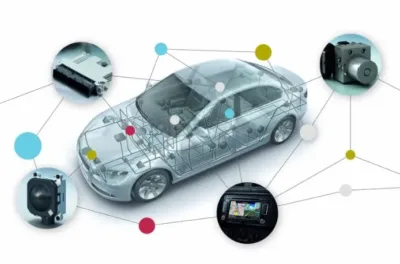
Modern cars have undergone a profound technological shift, moving from essentially mechanical engineering to a complex digital architecture driven by embedded software. At the heart of this transformation, the Electronic Control Unit (ECU) acts as the vehicle’s decision-making brain. Today, a premium vehicle typically includes anywhere from 80 to more than 150 ECUs, interconnected through sophisticated data networks. This massive proliferation of sensors and embedded electronics considerably increases overall system complexity.
In this context, rigorous embedded electronics validation is an absolute strategic priority for OEMs and suppliers. A single misinterpreted signal or software bug can compromise passenger safety, trigger costly vehicle recalls or damage a brand’s reputation. As a recognized specialist in embedded systems engineering and real-time data acquisition, DUNASYS supports key players in the automotive industry in designing, instrumenting and optimizing ECU test architectures.
What Is an ECU in a Vehicle?
An ECU is an electronic control unit made up of a microcontroller, memory chips, input/output interfaces and power circuits. Its core role is to receive digital or analog signals from sensors, process that information in real time using dedicated software, then send precise commands to actuators (injectors, servomotors, brake calipers, power inverters).
Each automotive ECU specializes in a specific functional domain:
- Engine and powertrain management: Controls fuel injection, ignition, valve timing and engine torque to optimize fuel consumption and meet emissions standards.
- Vehicle dynamics and braking safety: Ultra-fast management of ABS, ESC and stability control systems, requiring response times in the microsecond range.
- Cabin and comfort: Controls air conditioning, central locking, smart lighting and heated seats over lightweight networks such as the LIN bus.
- Advanced driver assistance: High-performance processing of camera, radar and lidar data to perform automatic emergency braking or lane keeping.
- Electrification and battery management: Continuous monitoring of battery cell temperature, state of charge (SoC) and state of health (SoH) in electric and hybrid vehicles.
- Telematics and communication gateway: Connects in-vehicle networks to the outside world (fleet management, cloud services, V2X connectivity).
Why Test an ECU?
Deploying new embedded software or a new hardware component requires a strict evaluation process. Methodical testing addresses four key requirements.
Ensuring Road User Safety
In a modern vehicle, many functions are safety-critical. A software failure in electronic power steering or the airbag system can cause serious incidents. Testing verifies that the equipment responds safely, even when a secondary component suffers a hardware failure.
Ensuring Regulatory Compliance
The automotive industry is subject to strict standards. ISO 26262 governs the functional safety of electrical and electronic systems. In addition, on-board diagnostics (OBD) regulations require continuous monitoring of emission levels and vehicle operation.
Validating Performance and Computing Power
Modern features demand strict compliance with timing constraints. ECU testing precisely measures latency, memory usage, power consumption and execution stability under heavy load.
Reducing Costs and Failure Risks
Detecting a software defect during development can cost up to one hundred times less than fixing it after series production starts. Early detection prevents large-scale recalls and protects brand image.
ECU Validation Phases
Automotive ECU validation follows a rigorous V-model. Each qualification step progressively verifies that the actual hardware behavior matches the theoretical design.
Unit Testing
Unit tests are performed at source code level. Developers isolate each algorithm or subroutine to verify that its output exactly matches the specification. This ensures the core logic is free of mathematical errors and null pointer bugs.
Integration Testing
Once software modules have been validated individually, they are assembled to verify their interoperability. Integration tests check data flows between the real-time operating system (RTOS), the hardware abstraction layers and the application layer.
Functional Testing
Automotive functional testing verifies that the ECU behaves as expected across usage scenarios. For example, when a coolant temperature sensor signal is stimulated, the test checks whether the fan command activates at the programmed threshold with the correct duty cycle.
Robustness and Stress Testing
These tests push the ECU to its operational limits: power micro-interruptions, overvoltage, extreme temperature variations, electrical interference and CAN bus saturation. The goal is to verify that the unit switches to a safe degraded mode without locking up irreversibly.
Real-World and Track Testing
The final phase involves testing the ECU directly in a prototype vehicle. Track tests and climatic chamber tests reveal how the ECU interacts with the real environment and all the vehicle’s dynamic components.
Key Tools for ECU Testing
To carry out these qualification phases without multiplying physical prototypes, engineers rely on advanced tools and solutions.
ECU Test Benches and Test Environments
An ECU test bench is laboratory hardware that combines simulated electrical loads, signal generators and data acquisition systems. It automates thousands of test scenarios without continuous human intervention.
Hardware-in-the-Loop (HIL) Simulation
Hardware-in-the-loop simulation is an essential technology in the automotive sector. The real physical ECU is connected to a real-time computer running digital models that simulate the vehicle’s dynamic behavior. The ECU “believes” it is installed in a moving vehicle.
CAN and CAN FD Data Acquisition and Analysis
Monitoring data exchanges during operation is crucial. Mastering data buses relies on advanced interface cards and bus loggers. DUNASYS’s lightweight Dunalog data loggers capture network activity with high precision.
Communication Protocols: CAN, CAN FD, LIN, FlexRay and Ethernet
Test benches must be able to inject and analyze frames across several standardized networks and protocols:
- CAN / CAN FD: The historical standard and its high-speed evolution (Controller Area Network Flexible Data-Rate), at the core of DUANACAN modules’ expertise.
- LIN: Used for low-cost secondary sensors and actuators.
- FlexRay: Designed for deterministic, high-speed, fault-tolerant applications.
- Ethernet: Essential for carrying the high data rates required by infotainment and autonomous driving sensors.
ECU Testing and Embedded Systems: Modern Architecture
ECU validation cannot be performed in isolation. It is part of a global computing architecture. With the shift to centralized zonal and domain controller architectures, ECUs no longer handle a single mechanical task: they host multiple containerized microservices, in line with the software-defined vehicle (SDV) trend.
This paradigm makes embedded system validation even more demanding. Tests must evaluate the distribution of computing power, real-time operating system management and precise clock synchronization between distributed devices over Time-Sensitive Networking (TSN) Ethernet.
ECU Validation for ADAS
Advanced driver assistance systems (ADAS) are one of the greatest challenges in modern automotive engineering. ECU testing for ADAS requires fusing heterogeneous data:
- Real-time analysis of HD camera image streams.
- Processing of echo and distance data from radar and lidar.
- Complex sensor fusion algorithms to build a dynamic 3D map of the vehicle’s surroundings.
To validate these functions without driving millions of physical miles, engineers inject video streams and virtual point clouds directly into the ADAS ECU via HIL test benches coupled with digital environments simulating traffic, weather and unexpected obstacles.
Current Challenges in ECU Validation
The rapid evolution of automotive technology raises several major challenges.
Growing Software Complexity
The volume of embedded code has increased tenfold in a decade. Managing dependencies, regression testing and continuous hardware/software integration requires new automated processes.
Automotive Cybersecurity (ISO/SAE 21434)
A connected vehicle is a potential cyberattack target. ECU validation must include penetration testing to ensure that cryptographic keys, the CAN bus and personal data are protected against malicious injection.
Powertrain Electrification
Electric vehicles involve handling high voltages. Test benches must provide galvanic isolation for measurement equipment to keep test teams safe.
Over-the-Air (OTA) Updates
Modern ECUs receive remote software updates throughout the vehicle’s lifetime. ECU validation must certify that firmware downloads complete securely, with no risk of bricking the vehicle.
How DUNASYS Supports Your ECU Validation Projects
Embedded systems engineering requires tailored solutions for the most advanced electronic architectures. With proven expertise in the automotive industry, DUNASYS Technology provides end-to-end support across the entire validation cycle of your ECUs.
Our expert teams design data logging and diagnostic tools trusted by leading OEMs and Tier 1 suppliers:
- Dunalog: A range of standalone real-time data loggers for CAN, CAN FD and LIN buses.
- Duanacan: Hardware interfaces for in-vehicle network acquisition and simulation.
- Dunadiag: An advanced software suite for ECU diagnostics and monitoring.
Whether through technical assistance embedded in your R&D teams or a custom project, DUNASYS ensures the reliability and performance of tomorrow’s embedded systems.
Key Takeaways
- An ECU is an onboard automotive computer that controls one or more vehicle functions.
- ECU testing validates the safety, reliability and performance of embedded systems.
- ECU validation relies on structured methods such as functional testing, test benches and HIL simulation.
- CAN and CAN FD protocols play an essential role in data exchange between ECUs.
- ADAS and autonomous vehicles significantly increase ECU validation needs.
FAQ
An ECU is an onboard electronic control unit that receives information from sensors, processes that data using software and controls actuators to perform specific functions.
ECUs must be tested to ensure passenger safety, verify compliance with international standards, validate system reliability against climatic and electrical disturbances, and prevent large-scale vehicle recalls.
HIL (hardware-in-the-loop) testing is a simulation method in which the real ECU is connected to a computer that simulates the vehicle’s physical behavior in real time. This makes it possible to test the ECU in near-real-world conditions in the lab.
Embedded software validation focuses solely on source code quality and the absence of application bugs. Full ECU validation assesses how the software performs once integrated on the physical hardware, under real signals, loads and electrical constraints.
The main communication protocols analyzed during testing are CAN, CAN FD, LIN, FlexRay and Automotive Ethernet.
Testing an automotive ECU follows a rigorous methodology that combines software unit tests, HIL simulation on a test bench with signal injection, then endurance testing on a physical prototype, with data acquisition using specialized tools such as Dunalog or DUANACAN.