ADAS: Understanding Driver Assistance Systems
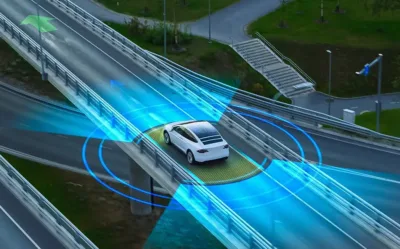
ADAS: Understanding Driver Assistance Systems
The automotive industry is undergoing a profound transformation in which innovation is no longer defined solely by an engine’s mechanical performance, but by the intelligence of its onboard systems. In this new ecosystem, road safety has become the top priority in automotive engineering. Faced with increasingly strict regulations and high user expectations, automakers are redoubling their efforts to design vehicles capable of anticipating road hazards.
At the heart of this revolution are ADAS (Advanced Driver Assistance Systems). By providing active or preventive assistance to drivers, these technologies drastically reduce the risk of accidents caused by human error or inattention. Beyond their immediate contribution to safety, ADAS technologies represent the fundamental foundation upon which the gradual transition to autonomous vehicles is built.
As a recognized expert in electronic and software engineering, Dunasys Technology is at the forefront of this transformation. With its in-depth expertise in vehicle communication networks and onboard data acquisition tools, Dunasys supports automotive industry players in the design, validation, and integration of the ADAS systems of the future.
What is an ADAS system?
An ADAS system refers to a set of electronic modules, smart ADAS sensors, actuators, and embedded software algorithms installed in a vehicle. Its primary purpose is to assist the driver with driving maneuvers, maximize safety on board, and optimize ride comfort.
The features offered by a driver assistance system fall into two categories:
- Passive driver assistance systems: These monitor the surroundings and alert the driver in the event of danger via an audible, visual, or physical signal, without directly intervening in the vehicle’s path.
- Active driver assistance systems: These temporarily take control of the vehicle’s mechanical systems to correct the path or initiate emergency braking in the face of an imminent obstacle.
By continuously analyzing data streams, these advanced features help prevent a large number of traffic accidents and save lives, making ADAS an essential feature in modern cars today.
How do ADAS technologies work?
The performance of an ADAS system depends on its ability to accurately perceive its surroundings. To achieve this, vehicles use a combination of multiple complementary sensors, each providing a specific level of accuracy depending on weather conditions, distance, and the objects to be detected.
Radar Sensors
Automotive radar uses electromagnetic waves to measure the relative speed and exact distance of surrounding objects. Capable of operating in fog, heavy rain, or at night, radar is the key sensor for monitoring long-range following distances and triggering obstacle alerts.
Dashcams
Located on the windshield or distributed around the vehicle body, the cameras and the rearview camera capture the vehicle’s surroundings. Combined with computer vision and deep learning algorithms, they detect road markings, traffic signs, pedestrians, and cyclists, and manage high beams.
Ultrasonic Sensors
Ultrasonic sensors emit short-range acoustic waves. Typically mounted in the front and rear bumpers, they are mainly used during parking maneuvers and when reversing at low speeds.
Lidar
Lidar scans the environment using laser beams to generate a high-resolution 3D map. It provides unmatched accuracy regarding the shape and position of objects, making it a major asset for navigating autonomous vehicles.
GPS and HD Maps
Satellite navigation combined with high-definition mapping gives the system the ability to anticipate conditions. It provides the vehicle with information about the road’s geometry and the limits set by traffic laws, allowing the driver to adjust their driving in advance.
Key Driver Assistance Features
Thanks to the synergy of these ADAS technologies, today’s vehicles are equipped with a comprehensive range of driver assistance features:
- Automatic Emergency Braking: Identifies the risk of a frontal collision and initiates powerful emergency braking if the driver does not press the brake pedal.
- Adaptive Cruise Control: This intelligent system maintains the set speed while automatically adjusting the distance to the vehicle ahead.
- Lane Departure Warning: Alerts the driver if the vehicle unintentionally drifts across a solid or dashed line.
- Lane Keeping Assist: Applies a gentle torque to the steering wheel to automatically correct the vehicle’s path and keep it centered in its lane.
- Blind Spot Detection: Signals the presence of a vehicle in the blind spot with a visual alert in the rearview mirror.
- Traffic Sign Recognition: Reads and displays speed limits in real time on the instrument panel to help the driver comply with traffic regulations.
ADAS and Autonomous Vehicles: What Are the Differences?
There is often confusion between ADAS features and the concept of autonomous vehicles. The fundamental distinction lies in the level of automation and responsibility granted to the system, as defined by SAE standards:
- Levels 1 and 2 (current ADAS): The driver is legally responsible and must maintain constant attention on the road. Even when combining adaptive cruise control and lane-keeping assist, human supervision remains mandatory.
- Level 3 (Conditional Autonomy): The vehicle manages driving under specific conditions. The driver may divert their attention but must remain ready to take control if the situation requires it.
- Levels 4 and 5 (Fully Autonomous Vehicle): The system manages the entire journey without requiring any driver intervention or presence.
Thus, ADAS technologies are the essential first step toward the emergence of future autonomous vehicles.
The Technical Challenges of ADAS Development
The implementation of advanced driver-assistance systems poses significant engineering challenges for automakers:
Real-time processing
Computers must analyze massive streams of multisensor data in just a few milliseconds to ensure an instantaneous response in critical situations.
Sensor Fusion
Sensor fusion involves combining data streams from cameras, radar, and lidar. It provides a single, highly reliable representation of the environment, compensating for the physical limitations of each individual sensor.
Cybersecurity
As vehicles become increasingly interconnected, protecting control units against remote intrusions has become a major functional safety challenge.
Functional Reliability and Standards
Software development adheres to strict safety requirements, which mandate rigorous procedures for the certification and calibration of components.
ADAS System Validation and Testing
To ensure flawless reliability, ADAS testing and validation require advanced methodologies that combine physical testing and numerical simulations:
- Field testing on test tracks: Conducting braking and evasion scenarios with automated targets.
- HIL (Hardware-in-the-Loop) simulation: Injecting virtual scenarios into the control units to test millions of kilometers and rare situations.
- Data acquisition and analysis: Recording data exchanges on the vehicle’s communication buses during real-world driving.
To support these strategic phases, Dunasys Technology offers a comprehensive range of in-vehicle engineering tools:
- Dunalog : Data logger puissant pour la capture et l’enregistrement haute vitesse des réseaux embarqués (CAN, CAN-FD, LIN, Ethernet).
- DunaCAN : Outil d’analyse et de supervision des flux de communication entre les calculateurs ADAS.
- DunaDiag : Solution complète dédiée au diagnostic électronique et au calibrage / réglage des calculateurs et capteurs.
ADAS Applications in Fleets and Connected Vehicles
Driver assistance systems are now rapidly expanding into the fleet management and commercial vehicle markets. By integrating ADAS data into telematics solutions, fleet managers gain valuable tools for action:
- Safety and Training: Analysis of eco-driving, risk detection, and personalized training programs for drivers.
- Predictive maintenance: Anticipating breakdowns, detecting sensor misalignment, and reducing maintenance costs.
- Car-sharing services: Securing access and automatically monitoring vehicle condition using connected devices such as DCar-E.
Dunasys’ Expertise for Your ADAS Projects
Drawing on its expertise in automotive engineering and embedded systems, Dunasys supports automotive engineering firms in the deployment of their complex projects:
- Technical Assistance: Provision of qualified engineers specializing in electronic architecture, AUTOSAR software, bus networks, and ADAS validation.
- Custom Projects: Design of electronic boards, specialized test benches, and telematics tools tailored to your needs.
Contact our experts to accelerate the development and validation of your future ADAS features.
Questions & Answers
An ADAS (Advanced Driver Assistance Systems) is a set of electronic devices, sensors, and software integrated into a vehicle to assist the driver, reduce the risk of accidents, and improve road safety.
ADAS systems provide Level 1 or Level 2 assistance under the constant supervision of the human driver. An autonomous vehicle (Levels 3 through 5) takes full control of driving without human intervention.
ADAS systems rely on a combination of automotive radars, onboard cameras, ultrasonic sensors, LiDAR, as well as GPS modules and high-definition maps.
ADAS validation is performed through testing on closed tracks, HIL (Hardware-in-the-Loop) simulation, and real-time data acquisition over communication buses using specialized tools such as Dunalog, DunaCAN, and DunaDiag from Dunasys.
They are designed to compensate for slow reaction times, lapses in attention, and human errors in judgment through instant alert mechanisms and automatic emergency braking.
The most common features are automatic emergency braking, adaptive cruise control, lane-keeping assist, blind-spot detection, and traffic sign recognition.