Eco-Driving and Connected Insurance: How Telematics Improves Road Safety
Telematics devices, CAN bus decoding, eco-driving scores: discover how DUNASYS turns vehicle data into reliable driving insights.
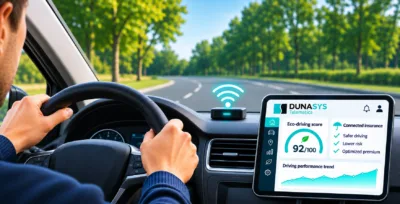
Eco-Driving and Connected Insurance: How Telematics Improves Road Safety
As the mobility industry undergoes rapid transformation, connected insurance relies on one fundamental capability: collecting, decoding and analysing vehicle data in real time. Today, traditional statistical assessments alone are no longer sufficient for insurers or fleet managers. The key challenge is to measure eco-driving performance to encourage responsible driving behaviour, reduce fuel consumption, minimise emissions and improve road safety.
DUNASYS is a key technology partner for insurers, automotive equipment manufacturers, vehicle rental companies and mobility providers. Through our high-precision data loggers, telematics devices and embedded engineering solutions, we turn real-world vehicle usage into actionable road safety and risk prevention insights.
What Is Eco-Driving in Connected Insurance?
Eco-driving refers to an environmentally responsible driving style based on anticipation, maintaining a steady speed, smooth acceleration, controlled braking and strict compliance with traffic regulations. By adopting these essential driving habits, drivers can reduce engine wear, preserve tyre condition, achieve significant energy savings and substantially lower the risk of accidents.
In connected insurance, these driving behaviours are no longer assessed subjectively. Instead, they are converted into measurable, quantifiable data. Thanks to embedded telematics solutions, every journey can be analysed objectively. For insurers, this makes it possible to assess the actual risk associated with each driver or vehicle rather than relying solely on theoretical demographic profiles.
How Does a Telematics Device Measure Eco-Driving?
To accurately measure the environmental and safety impact of driving behaviour, embedded technology follows a structured data collection and processing workflow:
- Vehicle data collection: The telematics device continuously monitors speed variations, harsh acceleration, late braking, cornering forces, mileage, stopping periods and engine idling time.
- CAN bus decoding and real-time processing: Raw data is extracted from the vehicle’s Controller Area Network (CAN bus) and instantly decoded using embedded algorithms.
- Eco-driving score calculation: The recorded data is aggregated to generate an overall driving behaviour score.
- Secure data transmission: The results are transmitted through secure IoT connectivity to the fleet manager’s or insurer’s application or platform.
This measurement accuracy builds directly on DUNASYS’ long-standing expertise in designing data loggers, developing robust telematics systems and processing high-frequency vehicle data.
From Vehicle Data to Insurance Risk Scores
To turn telematics into an effective tool for insurance pricing and risk prevention, the entire data value chain must be fully integrated:
Vehicle → Telematics device → CAN data collection and decoding → Analytics platform → Eco-driving score → Insurance premium adjustments and prevention programmes
It is essential to distinguish between raw vehicle data, individual driving indicators and the consolidated score used by insurers.
The reliability of insurance pricing depends directly on the quality of the initial measurements. Inaccurate or unreliable data can distort risk calculations. Thanks to its extensive expertise in vehicle testing within industrial environments, DUNASYS ensures certified data quality.
Key Eco-Driving Indicators for Insurance Providers
The table below summarises the main indicators collected and their relevance to insurance risk assessment:
| Indicator | What It Reveals | Value for Insurers |
|---|---|---|
| Harsh acceleration | Aggressive or erratic driving behaviour | Increased accident risk |
| Late braking | Lack of anticipation while driving | Higher collision risk |
| High-speed cornering | Risk-taking behaviour | Risk profile adjustment |
| Mileage and journey duration | Actual road exposure | Basis for pay-per-mile insurance |
| Driving consistency | Vehicle control and anticipation | Eco-driving score calculation |
| Driving times and locations | Vehicle usage patterns and conditions | More accurate actuarial modelling |
Connected Insurance: What Are the Benefits for Business Fleets?
Integrating eco-driving into corporate fleet management provides several strategic benefits:
- Lower insurance premiums: Reduced claims frequency can help fleet operators negotiate more favourable insurance rates.
- Targeted driver training: Identifying risky driving behaviour makes it possible to offer tailored coaching sessions, courses and driver training programmes.
- Reduced fuel consumption: Adopting smoother driving habits can reduce energy consumption by up to 15%.
- Objective claims assessment: In the event of an accident, vehicle data provides valuable insights into the circumstances surrounding the incident.
Explore our fleet management and car-sharing solutions to learn more.
Why Do Insurance Providers Need Reliable Telematics?
For connected insurance solutions to remain effective and sustainable over time, the underlying technology must meet strict requirements:
- Real-world durability: Telematics devices must operate reliably under demanding conditions, including extreme temperatures, vibrations and network interruptions.
- Compliance and security: Personal data protection and strict compliance with the General Data Protection Regulation (GDPR).
- Interoperability: Seamless integration with insurance platforms and mobile applications.
- Scalability: The ability to adapt to emerging mobility models and evolving industry requirements.
DUNASYS: Your Technology Partner for Connected Insurance
DUNASYS does not sell insurance policies. Instead, we provide the hardware and software infrastructure required by insurance companies and mobility industry stakeholders.
DUNASYS Technology
We develop high-precision data loggers for vehicle testing, essential for validating Electronic Control Units (ECUs) — learn more about our expertise in ECU testing and validation — and calibrating risk assessment models used by laboratories and insurers.
DUNASYS Telematics
Our vehicle telematics devices enable comprehensive fleet monitoring, car-sharing management and everyday vehicle usage tracking.
DUNASYS Engineering
Through our custom embedded engineering expertise, we support software integration and data processing projects across the automotive and connected mobility industries.
Real-World Use Cases
- Corporate fleets: A fleet manager equips vehicles with telematics devices to reduce fuel consumption and direct high-risk drivers towards eco-driving training programmes.
- Car sharing: Collected driving data helps secure shared vehicle usage and enables pricing adjustments based on driver behaviour.
- Usage-based insurance (UBI): Insurers leverage DUNASYS technology to offer tailored insurance solutions based on mileage and eco-driving performance.
Driving Data: Security, GDPR Compliance and Trust
Implementing connected insurance requires complete transparency regarding data collection and processing:
- Types of data collected: A clear distinction between geolocation data, anonymised telemetry and personal information.
- Regulatory compliance: Data processing must strictly comply with user consent requirements, GDPR provisions and guidance from the French Data Protection Authority (CNIL).
- Secure data transmission: End-to-end encryption between telematics devices and analytics servers.
Frequently Asked Questions (FAQ)
Yes. By demonstrating safe and smooth driving behaviour, drivers can reduce their exposure to accident risks, allowing insurers to offer potential premium discounts.
A telematics device primarily measures acceleration, braking, speed, cornering dynamics, distance travelled and vehicle diagnostic trouble codes.
An eco-driving score is generated by an algorithm that combines risky driving events with overall journey duration and driving conditions.
Absolutely. Our solutions transmit driving indicators through secure APIs directly to the insurer’s information systems.
Yes. Connected insurance is a valuable fleet management tool, combining lower fuel costs, improved road safety and potential reductions in insurance premiums.
By implementing robust encryption protocols, anonymising data streams and ensuring drivers provide explicit consent.