Embedded telematics: how it works, use cases and benefits for connected vehicles
Discover how embedded telematics works, the data it collects and its applications for connected vehicles and fleets.
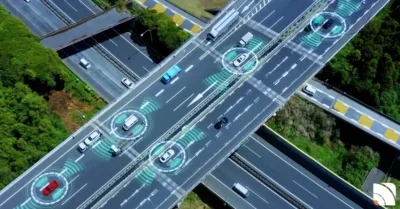
In an automotive sector undergoing rapid technological change, the transformation of vehicles into connected objects is fundamentally redefining how companies and fleet managers run their vehicle fleets. The rise of on-board data at the heart of the electronic architecture turns a simple means of transport into a genuine source of strategic information that can be used in real time. Today, embedded telematics has become the cornerstone of modern fleet management, predictive maintenance and overall journey optimisation.
By capturing, transmitting and analysing the activity of each vehicle, this technology offers unprecedented visibility into fleet condition, driver behaviour and operating costs. A recognised specialist in embedded systems, CAN data acquisition and connected mobility, DUNASYS supports automotive and transport players in deploying cutting-edge telematics solutions, tailored to the technological requirements of today’s and tomorrow’s vehicles.
What is embedded telematics?
Embedded telematics refers to the convergence of telecommunications and computing applied to vehicles. In practical terms, this technology relies on integrating a telematics system into the vehicle to collect, process and transmit information about the vehicle and its immediate environment.
Thanks to the connectivity provided by wireless communication modules, data is collected and transmitted in real time or with a delay to central servers. This enables continuous monitoring of the vehicle, its speed, its engine parameters and its geographical position.
It is essential to distinguish a simple consumer GPS from an embedded telematics system. A conventional GPS unit merely determines geographical coordinates and shows a route. A telematics unit, on the other hand, communicates directly with the vehicle’s on-board networks. It records not only the vehicle’s location but also fuel consumption, engine health, technical alerts and driving habits. Telematics thus turns a positioning signal into a comprehensive decision-support solution for the business.
How does an embedded telematics system work?
A complete telematics system relies on an integrated technology chain made up of several interconnected hardware and software components:
Telematics unit
The telematics unit is the central element installed in the vehicle. Connected to the diagnostic port or interfaced directly with the internal electronic architecture, it continuously reads the technical parameters generated by the vehicle’s ECUs.
On-board GPS
The on-board GPS module continuously captures the vehicle’s location, instantaneous speed, heading and route travelled. It enables accurate and responsive vehicle tracking.
Mobile networks
The data collected by the unit is encrypted and transmitted remotely over mobile networks (3G, 4G, 5G or dedicated IoT networks). This connectivity ensures a smooth flow of information between the field and the servers.
Cloud platform
A cloud platform centralises and stores all the large volumes of data sent by connected vehicles. It applies analysis algorithms to process the raw data and turn it into key performance indicators.
User dashboards
Fleet managers and operations managers access reports, charts and interactive maps from user-friendly dashboards. These interfaces make it possible to manage activity, set up custom alerts and improve decision-making.
What data can be collected?
Automotive telematics offers extremely precise measurement capabilities. The variety of information collected covers the full range of operational needs:
Vehicle position
Real-time GPS coordinates, journey history, routes taken and geofence crossing detection.
Mileage
Automatic and accurate odometer readings, essential for tracking servicing, managing lease contracts or allocating costs per journey.
Driving time
Measurement of engine running time, journey durations, idling time and compliance with working-hour limits for mobile staff.
Energy consumption
Close monitoring of fuel consumption for combustion vehicles, or of state of charge and electricity consumption for electric vehicles.
Driver behaviour
Analysis of driving style through speed, harsh acceleration, heavy braking, sharp cornering and over-revving, encouraging eco-driving and road safety.
Vehicle condition
Indicators on battery voltage, tyre pressure, fluid temperatures and the overall wear of mechanical components.
Fault codes and maintenance
Immediate reporting of ECU error codes, making it possible to detect emerging faults before they lead to costly downtime.
Applications of embedded telematics
Telematics adapts to many professions across all business sectors:
Fleet management
Overall supervision of light vehicle, van or heavy goods vehicle fleets to cut costs and optimise fleet utilisation.
Car sharing
Deployment of self-service fleets with automated booking and keyless access for employees or customers.
Predictive maintenance
Anticipating breakdowns and automatically scheduling services based on the actual wear measured on the vehicle.
Logistics
Optimisation of delivery rounds, real-time tracking of goods and traceability of transport operations.
Corporate mobility
Flexible management of business travel, tracking of mileage allowances and roll-out of mobility credit schemes.
Electric vehicles
Range management, charging planning and optimisation of the total cost of ownership of electrified fleets.
Embedded telematics and fleet management
For any business manager, fleet management is a major cost item. Integrating telematics into the automotive sector transforms the way the fleet is run day to day.
By analysing vehicle position and behaviour, managers can optimise routes effectively, cutting unnecessary mileage and fuel consumption. Real-time vehicle tracking makes it possible to dispatch the nearest technician in an emergency, leading to a clear increase in productivity.
In addition, analysing driver behaviour helps reduce accidents and premature component wear. Cost savings show up directly in the fuel bill, maintenance and insurance premiums.
To discover our specialised solutions and optimise the management of your fleet, see our fleet management solution.
Embedded telematics and car sharing
Embedded telematics is the essential technology building block for developing car sharing within companies or for public services.
Thanks to vehicle booking features linked to the telematics unit, a user can book a vehicle from a mobile app. Telematics enables doors to be unlocked remotely via a smartphone or an RFID badge, removing the need to handle physical keys.
This vehicle sharing increases the utilisation rate of company cars and encourages modern collaborative mobility, while ensuring accurate tracking of the mileage driven by each user.
Discover how we design the hardware and software architectures dedicated to car-sharing services.
Embedded telematics and predictive maintenance
Moving from reactive or time-based maintenance to predictive maintenance delivers considerable financial gains for professional fleets.
Embedded telematics sends instant technical alerts as soon as a malfunction appears on the vehicle’s CAN network. This early detection of anomalies makes it possible to intervene before a major breakdown and avoid serious mechanical failures.
By scheduling interventions only when necessary, you significantly reduce unplanned vehicle downtime.
To discover our intelligent platform for vehicle diagnostics and data analysis, explore our DCar-E solution.
The challenges of embedded telematics
Despite its major advantages, the telematics sector faces complex technical and regulatory challenges:
Cybersecurity
As connected vehicles are open to the outside world, automotive cybersecurity is crucial to prevent the risk of intrusion, hijacking of vehicle controls or data theft.
Data protection
The processing of location data and driving behaviour must strictly comply with applicable regulations, ensuring compliance and drivers’ privacy.
Connectivity
Ensuring continuous data transmission, including in areas with poor network coverage or during cross-border journeys.
Interoperability
Enabling units and software to communicate with multi-brand fleets that have heterogeneous electronic architectures.
Data volume
Processing and analysing the massive amounts of data generated by thousands of connected vehicles without overloading network and cloud infrastructures.
Embedded telematics and the Software Defined Vehicle
The automotive industry is moving rapidly into the era of the Software Defined Vehicle (SDV). In this context, embedded telematics is no longer limited to reporting metrics: it becomes the vehicle’s central bidirectional interface.
At the heart of the SDV, data centralisation makes it possible to adapt the vehicle to the user’s needs throughout its life cycle. Vehicle data continuously feeds increasingly sophisticated embedded software.
Telematics also makes it possible to perform OTA (Over-The-Air) updates to fix bugs remotely, apply security patches or unlock new services for users without a trip to the workshop.
To explore the challenges of next-generation automotive software architecture in more depth, see our SDV expertise.
How DUNASYS supports embedded telematics projects
With solid expertise in engineering and embedded systems, DUNASYS supports vehicle manufacturers, suppliers, software publishers and fleet managers in designing and integrating their telematics solutions.
Our know-how covers the entire value chain: from acquiring complex CAN data on on-board networks to developing custom telematics architectures. We design smart units and data gateways capable of interfacing precisely with your systems.
Whether you are deploying innovative fleet solutions, securing on-board communications or integrating connected mobility and driver assistance building blocks, DUNASYS provides strategic advice and expert technical support. We turn your technological challenges into high-performance tools that boost the efficiency and safety of your vehicles.
Key takeaways
- Embedded telematics makes it possible to collect, transmit and use vehicle data in real time.
- It typically combines an on-board unit, sensors, a geolocation system and a cloud platform.
- Its main applications are fleet management, car sharing, predictive maintenance and journey optimisation.
- Connected vehicles generate growing volumes of actionable data to improve safety, performance and operating costs.
- Embedded telematics is one of the pillars of the development of connected vehicles and software-defined vehicles.
Frequently asked questions (FAQ)
Embedded telematics is the technology that combines telecommunications and computing to collect, transmit and analyse the data generated by a vehicle in real time via a connected unit.
A GPS is limited to geolocation and route guidance. Embedded telematics goes much further by connecting to the vehicle’s computer networks to analyse its mechanical condition, consumption, safety and driving behaviour.
The telematics unit is connected to the vehicle’s electronic architecture. It reads the technical data, combines it with the coordinates from the on-board GPS and transmits it over a mobile network to a secure cloud platform.
For a vehicle fleet, telematics reduces fuel and maintenance costs, optimises journeys, improves driver safety, automates mileage tracking and streamlines fleet utilisation.
Yes, it is fully compatible. Telematics for electric vehicles makes it possible to accurately monitor battery state of charge, electricity consumption and remaining range, and to optimise charging planning.
Securing the data involves end-to-end encryption of wireless communications, the implementation of rigorous automotive cybersecurity protocols from the design stage, and compliance with data protection standards.