Connected vehicles: definition, technologies and fleet use cases
Discover what a connected vehicle is, the on-board technologies involved and how they help analyse data and manage a fleet.
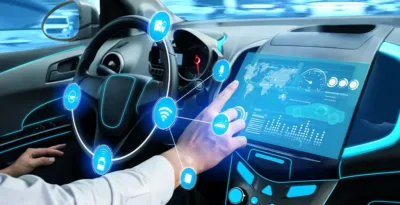
In a rapidly changing automotive landscape, the digital transformation of the transport sector is redefining fleet management. Today, connectivity is no longer a mere comfort option but a strategic performance lever. But what is a connected vehicle? Which technologies underpin this revolution, and how are they transforming the day-to-day work of fleet managers? In this article, discover the definition, technical architecture and practical use cases to optimise your company’s mobility.
What is a connected vehicle?
A connected vehicle is a car equipped with embedded systems, sensors and wireless communication modules. This equipment enables it to exchange data and information in real time with the internet, other vehicles, mobile apps or cloud servers.
The difference between a connected vehicle and an autonomous vehicle
It is essential to draw a clear distinction between a connected car and an autonomous vehicle:
- A connected vehicle shares information and receives services (diagnostics, geolocation, weather or traffic alerts). The driver remains 100% in control of the wheel.
- An autonomous vehicle uses advanced data processing and artificial intelligence algorithms to make driving decisions instead of a human.
In short: connectivity is a fundamental technology building block that paves the way for autonomy, but a connected vehicle does not drive itself.
OEM fitment (manufacturers) vs aftermarket (telematics unit)
There are two main ways to connect vehicles to a management network:
- Factory-fitted connectivity (OEM): manufacturers now integrate the electronic architecture and modems directly during vehicle development and production.
- The telematics unit (aftermarket): an additional device, the telematics unit, is plugged into the diagnostic port (OBD) or connected directly to the vehicle network. It is the ideal solution for standardising data collection across multi-brand fleets.
Practical example: a connected delivery van automatically sends its mileage, fuel level, GPS position and engine fault code to the fleet manager’s dashboard. If an anomaly occurs, an alert is issued within minutes, preventing a breakdown that would immobilise the vehicle.
How does a connected vehicle work?
An embedded telematics system relies on a seamless technology value chain running from the physical sensor all the way to the decision-maker’s screen:
- On-board data collection: dozens of ECUs read the vehicle’s parameters in real time (speed, consumption, battery level for electric vehicles, tyre pressure, emergency braking).
- On-board processing and transmission: the modem or embedded architecture unit encrypts this data and transmits it over the mobile network (4G/5G).
- Cloud analysis: servers centralise the data and apply processing algorithms to turn series of raw figures into actionable indicators.
- Reporting: the information is displayed on a web platform or dedicated apps, giving a 360° view of the fleet.
Key connected vehicle technologies
To better understand the technical building blocks that make up connected cars, here is a concise overview:
Embedded telematics
- Main role: capturing and transmitting vehicle data
- Direct benefit for the fleet: accurate activity tracking, mechanical diagnostics and driving analysis
GPS / Geolocation
- Main role: continuous positioning on the road
- Direct benefit for the fleet: route optimisation, fewer empty journeys and theft prevention
V2X communications
- Main role: vehicle-to-everything communication (V2V, V2I, V2N)
- Direct benefit for the fleet: anticipating traffic hazards and improving safety at intersections
ADAS (Advanced Driver Assistance Systems)
- Main role: active assistance systems (braking, lane departure warning)
- Direct benefit for the fleet: accident prevention and improved driver safety
Remote diagnostics
- Main role: reading ECUs and engine fault codes
- Direct benefit for the fleet: predictive maintenance and lower downtime rates
4G / 5G networks
- Main role: very high-speed data transmission channels
- Direct benefit for the fleet: alerts sent within minutes and remote updates
Mobile apps
- Main role: human-machine interface for the driver and the fleet manager
- Direct benefit for the fleet: expense reporting, digital vehicle inspections and training follow-up
Connected vehicles and fleet management: what are the use cases?
For a business, deploying connected cars or heavy goods vehicles addresses very practical operational challenges.
Location tracking and route optimisation
With real-time GPS connectivity, assigning an urgent job to the nearest driver becomes simple. You cut unnecessary mileage, optimise journey times on congested roads and improve customer satisfaction with controlled response times.
Predictive maintenance
No more services based solely on calendar estimates! Telematics reports the actual wear of components and error codes. You schedule servicing before a critical breakdown, avoiding the financial and logistical cost of interrupted transport.
Safety and risk prevention
Analysing driving behaviour (harsh acceleration, heavy braking, speeding) makes it possible to identify high-risk profiles. The company can then offer targeted training sessions in eco-driving and road safety, drastically reducing the accident rate.
Controlling operating costs (TCO)
By cross-referencing fuel or electricity consumption data with driving habits, you immediately identify opportunities for savings. Accurate consumption tracking helps reduce the fleet’s overall energy bill.
Eco-driving and CSR commitment
Sustainable mobility is at the heart of regulatory priorities in France and Europe. Connected cars accurately measure CO2 emissions, providing reliable dashboards to drive your company’s CSR policy.
What are the benefits for a business?
Investing in a connected fleet delivers measurable returns on investment at several levels:
- Productivity: valuable time saved in assigning tasks and automating schedules.
- Financial savings: a 10 to 15% reduction in fuel spending and lower repair costs.
- Enhanced safety: fewer accidents thanks to ADAS and driver awareness.
- Compliance and CSR: simpler usage reporting and automated CSR reports.
Limits, GDPR and cybersecurity: points to watch
Although the technology offers immense opportunities, integrating it requires great rigour.
GDPR compliance and privacy
In France, the CNIL (the French data protection authority) strictly regulates the geolocation of employees. Data collection must serve legitimate business purposes (invoicing, safety, fleet management). Allowing geolocation to be switched off outside working hours is a regulatory requirement.
Cybersecurity of embedded architectures
The more connected a system is, the larger its attack surface. Protecting communications between cars, the cloud and the infrastructure requires in-depth expertise in software engineering and network security.
DUNASYS tip: make sure your telematics and software partners apply proven cybersecurity standards to protect your strategic data against any hacking.
How to choose a connected fleet solution
To successfully digitalise your fleet, follow this methodical approach:
- Define your priority objectives: cost reduction, safety, green transition or geolocation?
- Audit your existing fleet: compatibility of combustion, hybrid and electric vehicles.
- Decide on the equipment: favour manufacturers’ native services or opt for a universal unit?
- Assess the software platform: dashboard usability, metric processing capacity and API integration with your in-house tools.
- Ensure compliance: validate the security of data storage and obtain the agreement of employee representatives.
Design reliable connected systems with DUNASYS
Developing, qualifying and integrating embedded electronic systems in automotive projects requires advanced engineering skills.
At DUNASYS Telematics, we support automotive players, suppliers and integrators with consulting, software architecture design, data processing and the validation of your embedded technologies and connectivity solutions, thanks to our telematics units such as the DCAR-E.
Looking to secure the development of your mobility solutions or optimise the management of your business vehicles? Contact the DUNASYS experts today to move your projects forward.
Frequently asked questions (FAQ)
No. A connected vehicle exchanges information over a wireless network, but driving remains entirely under the driver’s control. An autonomous vehicle, on the other hand, uses artificial intelligence systems to move without human intervention.
Telematics is the technology used to measure and transmit data remotely. The connected vehicle is the overall concept that includes the vehicle, communication networks, telematics and the associated mobile services.
Yes. By adding an aftermarket telematics unit plugged into the diagnostic port or the wiring harness, an older car can easily send its information to a modern management platform.
Yes, but it is strictly regulated. The employer must inform employees and employee representative bodies in advance. Permanent tracking is prohibited, and drivers must be able to switch off geolocation during personal journeys.