Automotive Data Loggers: How Manufacturers Are Speeding Up Their Vehicle Validation Cycles
The automotive industry is undergoing an unprecedented transformation at the start of 2026. The emergence of Software-Defined Vehicles (SDV), massive electrification, and the widespread adoption of Advanced Driver Assistance Systems (ADAS) have turned the vehicle into a rolling data center. For test engineers and R&D managers, this complexity translates into a major challenge: how to validate millions of lines of code and sophisticated hardware architectures within ever-shrinking timeframes?
The automotive datalogger (or data recorder) is no longer a simple passive diagnostic tool. It has become the central pivot enabling manufacturers to compress time-to-market while guaranteeing watertight safety. In this article, we explore how the latest generations of loggers are helping manufacturers transform their validation cycles.
What is an automotive data logger in 2026?
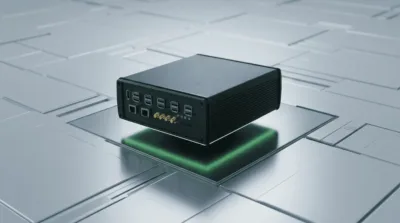
An automotive data logger is an onboard data acquisition system designed to capture, time-stamp, and store the data flows traveling through a vehicle’s internal networks. Unlike a simple consumer-grade USB module or a basic data logger, it meets strict industrial and regulatory requirements.
Beyond Recording: A Smart Hub
Today, a modern data logger must be capable of handling a multitude of protocols simultaneously. It is no longer limited to monitoring the traditional CAN bus. It must now process CAN FD, LIN, FlexRay, and, above all, automotive Ethernet for video streams and high-resolution LiDAR or radar sensors.
The major difference from a conventional data acquisition system lies in its ruggedness and autonomy. These devices are designed to operate under extreme conditions, withstanding temperature fluctuations ranging from -40°C to +85°C, while resisting the intense vibrations of test tracks. They intelligently manage their power supply to avoid draining the prototype’s battery and guarantee data integrity even in the event of a sudden power loss.
The Data Explosion: Why Traditional Methods Are Reaching Their Limits
The global automotive validation market is under constant pressure. According to the latest forecasts, the testing and measurement sector is expected to reach several billion dollars by the end of the 2030 forecast period. This growth is driven by three critical factors:
- Software complexity: A modern vehicle boasts phenomenal computing power. Every update requires comprehensive validation to prevent any regression.
- ADAS and autonomous sensors: Validating a Level 3 or 4 autonomous driving function requires recording terabytes of raw data per hour to train and verify perception algorithms.
- The multitude of variants: Between internal combustion, hybrid, and electric powertrains, the number of combinations that industry players must test has increased tenfold in a decade.
Without a high-performance data logger, teams are left facing information black holes. Engineers waste precious time trying to reproduce intermittent bugs observed on the road, due to a lack of precise and synchronized digital traces.
How the data logger actually speeds up the validation cycle
Multi-source capture and precision synchronization
To validate automatic emergency braking, it is necessary to correlate in real time what the camera sees, what the radar detects, and the mechanical response of the chassis. A high-quality data logger ensures perfect temporal synchronization (often via the PTP—Precision Time Protocol), guaranteeing that every signal—whether from an analog channel or an Ethernet message is aligned to the microsecond.
Edge Computing and Intelligent Filtering
Transferring massive amounts of data to the cloud is costly and time-consuming. Modern data loggers incorporate computing capabilities to perform initial analysis directly in the field. They allow you to:
- Trigger recording only during specific events.
- Extract statistics in real time.
- Filter relevant information to download only the footage that is useful to engineers, thereby reducing storage and bandwidth costs.
From the Field to the Digital Twin (HIL/SIL)
This is where the acceleration is most evident. The data captured on the road isn’t just used for immediate debugging; it feeds into HIL (Hardware-in-the-Loop) test benches and SIL (Software-in-the-Loop) environments. By recording a critical scenario just once, manufacturers can replay it indefinitely in the lab to test new software versions, thereby eliminating the need for thousands of kilometers of actual driving.
Industry Focus: ADAS, Electric Vehicles, and Software Quality
Validation of ADAS and Autonomous Driving Systems
In this field, data volume is the number one enemy. A specialized data logger must be capable of ingesting massive data streams from multiple cameras and LiDAR sensors. The challenge is to capture the reality on the ground in order to compare it with the decisions made by the onboard artificial intelligence. Manufacturers in North America and the Asia-Pacific region use these tools to reduce the risk of critical failures before commercial launch.
Electric Vehicles (EVs)
In electric transportation, the focus is on energy management. High-frequency monitoring of cell voltages and temperatures is crucial for optimizing battery range and lifespan. This data is used to create real-world usage profiles, which are then reused for accelerated aging tests in the lab.
Continuous Integration and Software Updates
A vehicle’s lifecycle no longer ends when it leaves the factory. Manufacturers are rolling out minor updates to pre-production fleets—and even to customer vehicles (with consent)—to detect abnormal behavior in real-world conditions. This continuous flow of information enables an unprecedented level of responsiveness to software security issues.
Best Practices for Scaling Your Data Flow
For a data logger deployment to be successful, it’s not enough to simply install it in the trunk of a prototype. You need to consider the entire pipeline:
- Standardization and metadata: Each data record must be accompanied by its context (vehicle software version, weather conditions, country, road type). Using standard file formats facilitates subsequent analysis.
- Automated data collection: Set up automatic Wi-Fi or 5G gateways. As soon as the vehicle returns to the garage or completes its test session, the data is indexed and ready for engineers to analyze.
- Security and cybersecurity: Test data is sensitive. Ensure that the logging system encrypts data transfers and that access to files is strictly controlled.
- Interoperability: The logger must be able to communicate with lifecycle management tools and big data analytics platforms.
DUNASYS: The Architect of Your Validation Chain
In a global market where the complexity of embedded systems is redefining industry standards, DUNASYS has established itself as a strategic partner for automakers and automotive suppliers. As a French specialist in automotive engineering, the company has developed cutting-edge expertise in designing custom data acquisition and analysis solutions capable of meeting the most demanding challenges of modern R&D.
To accelerate test cycles, DUNASYS offers exceptionally reliable tools designed to capture every piece of critical data in the field. Beyond simply supplying hardware, DUNASYS stands out for its ability to integrate into the entire development cycle.
When you choose DUNASYS, you’re not just getting a simple data logger you’re gaining access to engineering expertise that can transform your test campaigns into performance drivers. To discover how these solutions can be tailored to your next development phase, explore DUNASYS’s engineering and data logging services.
Conclusion: A Strategic Lever for the Industry
By 2026, accelerating validation cycles will no longer be an option but a vital necessity. The automotive data logger has evolved from a technical accessory to a strategic pillar. By enabling comprehensive data capture, seamless synchronization, and extensive reuse of on-road data in the virtual environment, it allows manufacturers to drastically reduce their development costs while raising safety standards.
Whether for a specific segment of electric vehicles or for the comprehensive validation of a new automotive platform, mastering data acquisition is the key to competitiveness. Partners like DUNASYS play a major role in this transformation by helping engineers navigate the complexity of new measurement technologies.
Questions & Answers
An automotive data logger is an electronic data acquisition system designed specifically for the transportation industry. This high-performance data logger connects to a vehicle’s internal networks to capture, time-stamp, and store data streams in real time. By 2026, it will no longer be a simple storage device, but rather an onboard computer capable of processing massive volumes of data from the vehicle’s electronic architecture.
In R&D, the data logger is used to monitor the vehicle’s dynamic behavior under real-world conditions. It enables engineers to conduct a precise analysis of the interactions between different control units, detect intermittent software anomalies, and ensure the safety of systems before they are brought to market. It is an indispensable tool for validating thermal performance, energy consumption, and the behavior of driver-assistance systems.
The main difference lies in durability and the supported protocols. A conventional data logger (such as an industrial model or a simple USB flash drive) is not designed to withstand extreme temperature fluctuations (-40°C to +85°C) or the vibrations of a moving chassis. In addition, an automotive model incorporates specific interfaces for communication buses (such as CAN or Ethernet) and intelligently manages its power supply so as not to interfere with the vehicle’s systems, even when the vehicle is stationary.
A modern data logger offers several types of channels for comprehensive data capture:
- Standard communication buses: CAN, CAN FD, LIN, and FlexRay.
- High-speed networks: Automotive Ethernet for cameras and ADAS sensors.
- Analog and digital signals: for measuring temperature, pressure, or electrical currents.
- Geolocation data: via built-in GPS/GNSS modules.
During the prototype phase, new software and hardware features are still unstable. Industry players use data loggers to capture every unexpected event that occurs during road tests. This valuable data makes it possible to fix bugs earlier in the development cycle, thereby avoiding massive recall costs once the vehicle enters mass production. It is a key driver for fostering technological innovation.
The choice depends on your application and the target test segment. Several criteria should be reviewed in the technical specifications:
- Number of ports: Make sure you have enough channels to cover all your networks (CAN, Ethernet, etc.).
- Bandwidth: Crucial for very large volumes of ADAS data.
- Connectivity: The ability to download data via 4G/5G or Wi-Fi greatly facilitates the teams’ work.
- Environment: Verify that the enclosure type is suitable for the conditions in your region (humidity, extreme heat).
Yes, absolutely. One of the great strengths of modern data logging is interoperability. Data captured on the road can be fed back into HIL or SIL test benches. This makes it possible to simulate real-world scenarios in the lab, thereby accelerating validation without the need to physically deploy vehicles on the road. This is now a common practice in North America, Europe, and Asia to reduce development time.