Automotive Diagnostics: Everything You Need to Know
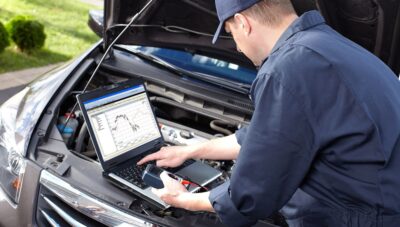
Automotive diagnostics is a crucial step in ensuring your vehicle’s safety and performance. Thanks to modern technologies, it allows potential malfunctions to be detected quickly and effectively.
What is automotive diagnostics?
Automotive diagnostics is a process used to identify a vehicle’s mechanical and electronic problems. It relies on electronic devices and software to analyze data from the vehicle’s various systems. Originally a manual process, it evolved with the advent of OBD-II (On-Board Diagnostics) technology, which allows the reading of error codes generated by the onboard computer. Automotive diagnostics is essential for proactive maintenance, helping to prevent major breakdowns, optimize vehicle performance, and ensure the safety of drivers and passengers.
Dunasys’s expertise in automotive diagnostics
In this rapidly evolving field, Dunasys stands out as a key player, specializing in embedded systems and advanced automotive diagnostic solutions. Our company offers innovative technologies that make it easier to detect mechanical and electronic anomalies in vehicles.
Thanks to our high performance tools and tailored solutions, we help automotive professionals optimize their maintenance and repair operations while ensuring maximum safety on the road. Our expertise covers not only OBD-II systems but also predictive diagnostic solutions, integrating AI and IoT to provide real time assistance and anticipate potential failures.
The evolution of automotive diagnostics
Automotive diagnostics has evolved considerably, moving from rudimentary, manual methods to sophisticated, connected systems. In its early days, mechanics relied mainly on experience and simple mechanical tests to identify problems, a time consuming approach prone to error.
Recent advances have seen the emergence of OBD-II scanners and diagnostic software, making these technologies accessible through portable devices and mobile apps. In addition, the integration of Artificial Intelligence (AI) and the Internet of Things (IoT) has paved the way for predictive and remote diagnostics, further transforming the automotive diagnostics landscape.
What are the different types of diagnostics?
Automotive diagnostics can be classified into three main categories: electronic diagnostics, manual diagnostics, and remote diagnostics. Below is a brief overview of each category.
First, electronic diagnostics. This uses OBD-II scanners and other electronic devices to read and interpret the vehicle’s error codes. These tools connect to the onboard computer and provide detailed information on potential problems.
Next, there is manual diagnostics. This is carried out by experienced mechanics using traditional tools such as multimeters and pressure gauges to physically inspect vehicle components and identify malfunctions.
Finally, there is remote diagnostics, also known as automotive telediagnostics. Remote diagnostics allows technicians to diagnose problems via an internet connection, using telematics devices to monitor vehicle performance in real time and provide immediate assistance.
What are the benefits of automotive diagnostics?
Automotive diagnostics offers numerous benefits. It helps prevent major breakdowns by identifying problems as soon as they appear, reducing the risk of costly repairs. By detecting malfunctions early, it helps maintain optimal vehicle performance and extend its lifespan.
In addition, regular diagnostics help improve road safety by ensuring that all of a vehicle’s systems are functioning correctly.
Finally, it provides vehicle owners with peace of mind, knowing their car is in good working order and that they can avoid unexpected issues on the road.
Questions & Answers
Automotive diagnostics is a technical procedure that involves querying a vehicle’s control units using a diagnostic tool or an OBD tool. It allows for detecting error codes and analyzing engine, transmission, brake, or embedded electronics systems.
A diagnostic tool connects to the vehicle’s OBD (On-Board Diagnostics) port to read data from the control units. It then interprets the fault codes and provides an inspection report. These tools can be multi brand or specific to a particular car manufacturer.
An OBD tool is often compact and used for simple checks, while a diagnostic scanner is more comprehensive, capable of interacting in depth with vehicle systems, clearing errors, running actuator tests, and configuring embedded electronic products.
Automotive diagnostics can identify problems related to the engine, braking, fuel delivery, transmission, or electronics. Error codes (P, B, C, U) each correspond to a specific functional area.
The cost varies depending on whether it’s a simple OBD check or a complete multi brand diagnostic with a detailed report. For professionals, investing in software or an embedded solution can be more cost effective in the long run, as offered by Dunasys on its connected vehicles page.
Yes, if the tool is multi brand. The most advanced solutions support vehicles from multiple manufacturers. Dunasys develops connected products compatible with the leading market protocols (CAN, LIN, etc.).
It enables real time analysis, remote updates, and quick access to fault codes. Thanks to connected vehicle systems, professionals can remotely monitor the status of a vehicle fleet and plan maintenance.
No, but it indicates the nature of the problem. Automotive diagnostics is a decision support tool for garages or technicians, who can then intervene with precision. It therefore improves efficiency and reduces errors.
Yes, some automotive diagnostic software is compatible with PC, tablet, or smartphone via a Bluetooth or USB interface. These solutions allow for more flexible diagnostics, particularly in connection with platforms such as those developed by Dunasys.
Dunasys designs embedded solutions for reading vehicle data, collecting error codes, and performing real time analysis of electronic systems. Our connected vehicle products allow manufacturers and equipment suppliers to optimize their fleet management, maintenance, and technical analysis.