12V Battery Resting Voltage (OCV): How to Interpret the Voltage of a Car Battery
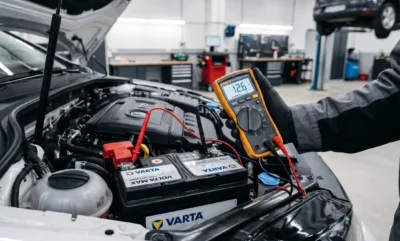
The battery is the electrical heart of your vehicle. Yet it remains one of the leading causes of breakdowns on the road and one of the most frequently replaced components. It is also, however, the least well-diagnosed component. Battery testing is part of the daily workshop routine, yet when treated as a simple checkbox to tick “OK” or “Replace,” it is far too often misinterpreted. In the era of massive electrification, mastering the reading of battery health indicators has become a key skill for every technician.
Understanding what a truly healthy battery is requires a scientific approach, integrating electrochemical aging modeling, internal resistance analysis, Cold Cranking Amps (CCA) evolution, State of Health (SOH) estimation, and the influence of charge cycles and temperature. And above all: a dynamic view over time.
What Is the Resting Voltage of a Battery (OCV)?
In the automotive maintenance field, OCV is the reference measurement.
The Battery Resting Voltage
Definition of a Healthy Battery
No battery is perfect. “Healthy” does not mean “like new.” It means the battery can reliably deliver the required performance under real-world operating conditions: cold starting, parasitic loads, regenerative charging, and powering modern accessories.
Normal OCV Values
For 12V systems, the primary focus is on starting power, voltage stability, and internal resistance. In both cases, the key question is not just what the tester displays, but why it displays it.
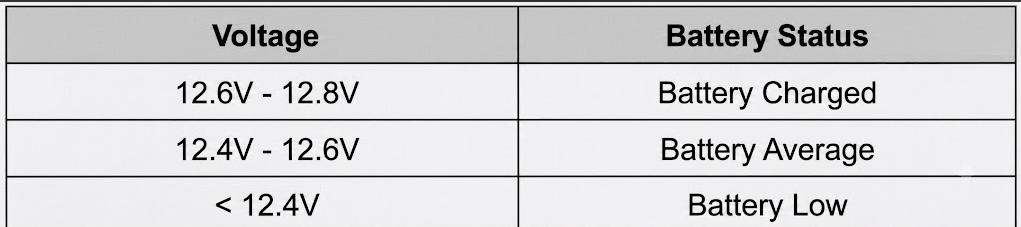
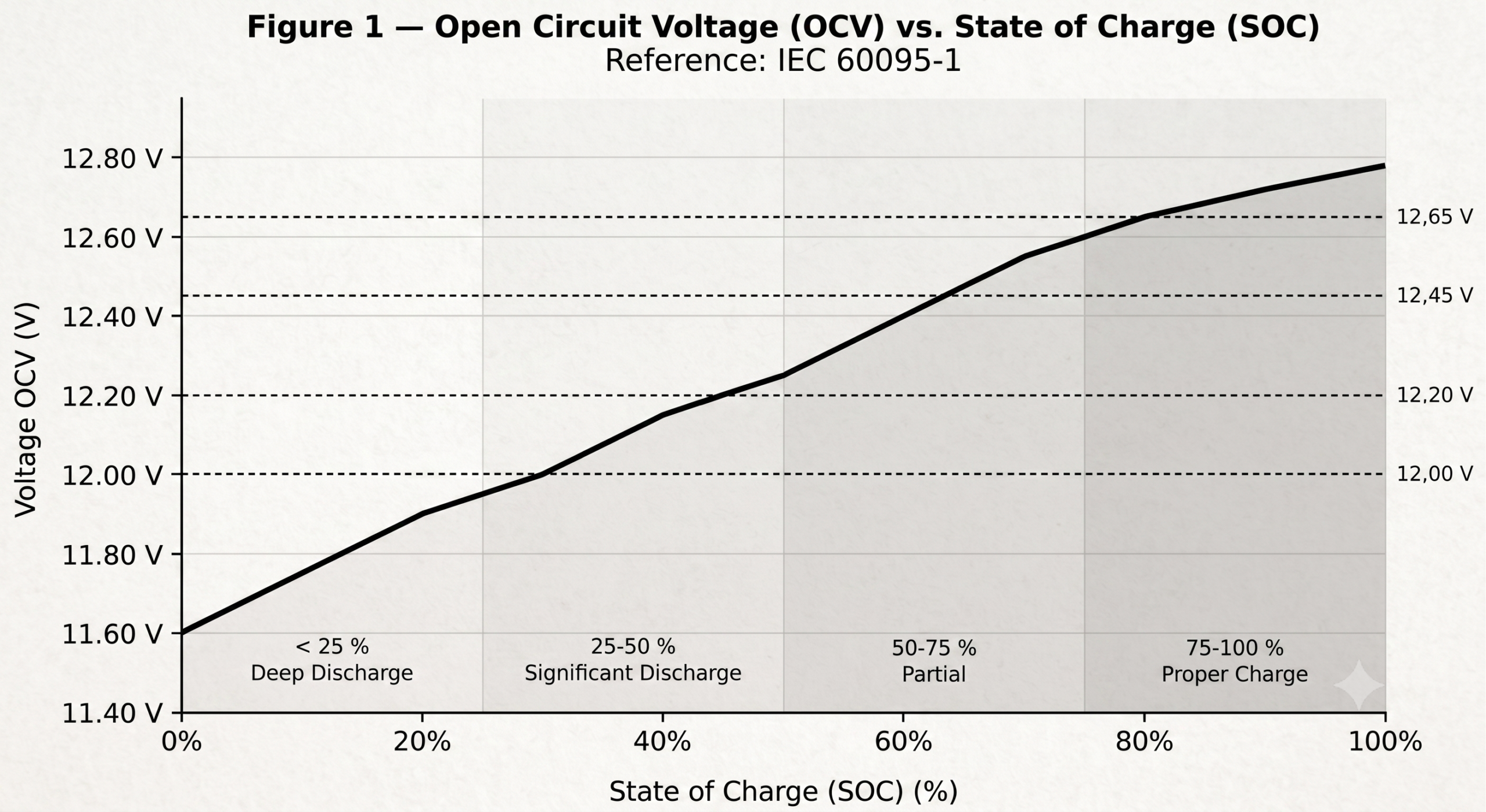
The IEC 60095-1 standard defines the nominal voltage of a healthy 12V battery as between 12.6V and 12.8V after several hours without load or power supply. Below 12.4V, the battery is partially discharged, which is not necessarily a failure in itself, but it is a warning signal.
Understanding Your Battery Health: Voltage, SOC, and SOH
What Is Battery Voltage?
Voltage, expressed in volts, represents the electrical pressure available in the circuit. In a classic lead-acid battery or a lithium-ion cell, this force results from a chemical reaction between the plates and the electrolyte. At rest, without any demand from the engine or accessories, measuring this voltage, namely the OCV, makes it possible to assess the potential energy still present in the cells.
Why Is It Essential to Measure It?
Performing a regular voltage test is the preventive maintenance step. It enables:
- Detection of deep discharge before it damages the internal chemistry.
- Verification that the charger or alternator is fulfilling its role correctly.
- Anticipation of performance drops related to temperature or aging.
- Guarantee of safe starting and prevention of complete battery failure.
SOC and SOH: Stop Confusing Charge Level with Health Status
For a precise diagnosis, two fundamental indicators tracked by the BMS or diagnostic tools must be distinguished:
- SOC (State of Charge): This is the current charge level. It indicates the available capacity at a given moment (for example: my battery is 80% full). It is estimated using the resting voltage curve.
- SOH (State of Health): This is the overall health status. It compares the battery’s current performance against its original specifications. A battery can display a SOC of 100% while having a degraded SOH, meaning it will drain very quickly because its internal resistance has increased over time.
Continuous monitoring makes it possible to track both variables in order to optimize the lifespan of your equipment and plan replacement before a total failure occurs.
What Voltage Should a Healthy 12V Battery Show?
As outlined above, three values are taken into account to determine whether a 12V battery is in good condition. The IEC 60095-1 standard defines the nominal voltage of a healthy 12V battery as between 12.6V and 12.8V after several hours without load or power supply. Below 12.4V, the battery is partially discharged.
Why Can Battery Voltage Drop?
Parasitic Drain on the Network
Even when the ignition is off, certain vehicle components continue to draw on the electrical circuit.
- This parasitic drain can come from a poorly calibrated BMS, an alarm system, or a faulty electronic module that prevents the control units from entering sleep mode.
- If this discharge rate exceeds manufacturer specifications, the battery capacity drains slowly, causing a voltage drop that can reach the safety cut-off threshold, making starting impossible.
Accelerated Battery Aging
Aging is an inevitable chemical process, but it can be accelerated by external factors such as high temperatures.
- Over time, the battery’s internal resistance increases, impacting its ability to maintain a stable resting voltage. Whether using ion, LiFePO, or classic technology, each life cycle reduces the energy reserve.
- Regular measurement makes it possible to track SOH evolution and anticipate replacement before a total failure occurs.
The Impact of Short Trips on the Charge Cycle
In a combustion engine vehicle, starting is the action that demands the highest instantaneous capacity. The alternator needs a certain amount of driving time to compensate for the energy drawn.
- If you frequently make short trips, the battery never receives a full charge.
- This chronic deficit leads to a progressive drop in resting voltage, resulting in premature sulfation of the acid plates.
- Over time, this irreversibly degrades the SOC, even if you attempt to recharge the battery later.
The Critical Influence of Extreme Temperatures
Temperature is a major parameter for safety and chemical performance.
- Cold: It increases the internal resistance of the cell, making current flow more difficult. A battery displaying 12.6 volts at 20°C may see its starting power collapse at 0°C.
- Heat: It accelerates the self-discharge rate and internal corrosion. Prolonged exposure to high temperatures reduces battery health, even if it appears to function normally during summer.
The Energy Demands of Modern Vehicles
Today’s cars are true electronic systems on wheels. This sophistication comes at a cost for the battery:
- Parasitic consumption: Even with the engine off, the BMS, alarms, and control units maintain minimal activity.
- Start-stop management: Tests show that repeated demands impose very stressful operating conditions on conventional batteries, often requiring more robust technologies.
- Onboard electronics: The proliferation of sensors demands constant voltage precision. A slight drop below the cut-off threshold can generate error messages on the dashboard, even without the battery being physically out of service.
Limitations of Voltage for Battery Diagnostics
Relying solely on voltage is a common diagnostic error that can mask the actual condition of your storage systems. A surface charge can temporarily increase the reading. Always interpret voltage in context and eliminate surface charge before any serious test (a light discharge of a few seconds).
Surface Voltage: An Electrical Mirage
After recharging via the alternator or an external charger, a concentration of ions stagnates on the lead plates or lithium cells. This accumulation artificially inflates the voltage reading on your multimeter. If you take your measurement immediately, you might believe the SOC is at 100%, when the actual capacity is far lower. A brief load test using the headlights, or an extended rest period, allows the voltage to stabilize, which is essential for an accurate diagnosis.
Internal Resistance: The True Health Indicator
A car battery can display a perfect OCV of 12.6V while being incapable of starting the engine. The culprit is internal resistance.
- With aging and temperature variations, the internal chemistry degrades (sulfation for acid batteries, electrode wear for LiFePO).
- This degradation impacts the SOH: the battery has “the voltage,” but no longer has “the current.”
For a precise test, it is therefore crucial to combine voltage reading with a battery tester capable of measuring conductivity. This is where an advanced monitoring method, integrating security algorithms and performance analysis, becomes indispensable to avoid unexpected failure despite a seemingly correct surface voltage.
Why Battery Monitoring Improves Diagnostics
Periodic multimeter diagnostics have their limits: they are merely a snapshot at a single point in time. For fleet management or rigorous health monitoring, battery monitoring is the solution. It consists of connected, continuous surveillance of electrical parameters (voltage, current, temperature) to anticipate any failure.
The DUNASYS telematics unit automatically measures OCV after each extended vehicle stop (typically 4 to 8 hours without load). This measurement is coupled with thermal correction (-18 mV/°C relative to the 25°C reference) for a reliable SOC estimate regardless of weather conditions. The continuous history of OCV measurements makes it possible to detect a progressive drift well before it becomes a failure.
Unmatched Precision Through Data Analysis
Unlike a simple tester, the DUNASYS unit analyzes the discharge curve in real time. This method makes it possible to:
- Calculate SOC and SOH with precision, taking into account internal resistance that evolves with aging.
- Identify parasitic consumption on the vehicle’s circuit during rest phases.
- Avoid critical cut-off thresholds that damage lead, ion, or LiFePO cell types.
Conclusion: DUNASYS Expertise at the Service of Your Mobility
Mastering OCV is an indispensable step in guaranteeing the safety and performance of your vehicles. Whether you use classic acid batteries or cutting-edge lithium systems, understanding voltage is the first line of defense against immobilization.
By choosing the monitoring solutions and diagnostic tools developed by DUNASYS, you transform a simple voltage measurement into a powerful predictive maintenance strategy. Optimize the lifespan of your equipment, reduce replacement costs, and ensure total energy stability across your vehicle fleet.