Embedded Systems: The Invisible Technology Powering Our Connected World
What Is an Embedded System?
An embedded system is a specialized computing system designed to perform one or several specific tasks within a larger device. Unlike a personal computer, which is a versatile platform capable of running a wide range of software applications, an embedded system is dedicated to a particular function. It combines hardware and software and is typically not intended to be reprogrammed by the end user.
One of the key characteristics of embedded systems is their ability to operate autonomously while meeting strict reliability and performance requirements. These constraints may include power consumption (especially for battery-powered devices), memory limitations, compact size, or real-time responsiveness. As a result, embedded systems development is a highly specialized engineering discipline.
How Embedded Systems Work
The architecture of an embedded system relies on a careful balance between hardware and software components.
Hardware Architecture
At the core of every embedded system is either a microcontroller or a microprocessor. These electronic components act as the brain of the device.
Microcontroller (MCU)
Microcontrollers are the most common choice for embedded applications. They integrate the processor, memory (RAM and Flash), and input/output interfaces (GPIO) on a single chip. Their main advantages are low cost, compact size, and low power consumption, making them ideal for consumer electronics and IoT devices.
Microprocessor (MPU)
More powerful than microcontrollers, microprocessors require external memory and peripheral components. They are typically used in more complex embedded systems that demand intensive data processing, such as vehicle onboard computers, industrial equipment, or advanced medical devices.
Hardware also includes sensors that collect information from the environment (temperature, light, pressure, motion, etc.) and actuators that perform physical actions (motors, LEDs, relays, and valves). Communication with external systems is enabled through network interfaces such as Wi-Fi, Bluetooth, Ethernet, 4G/5G, or physical communication ports.
Embedded Software
Software brings embedded hardware to life. It is specifically developed for the selected hardware platform and is usually stored in non-volatile memory.
Unlike traditional software development, embedded software must be highly optimized to operate within limited hardware resources while maintaining reliability and performance.
Programming is commonly carried out using low-level languages such as C and C++, which provide direct access to hardware resources. For more advanced applications, developers often use a Real-Time Operating System (RTOS).
Unlike general-purpose operating systems such as Windows or macOS, an RTOS guarantees that critical tasks are executed within predefined timing constraints. This capability is essential in applications where milliseconds matter, including aerospace systems, automotive electronics, and industrial automation.
Applications of Embedded Systems
Embedded systems have become so pervasive that we often use them without even noticing.
Automotive and Transportation
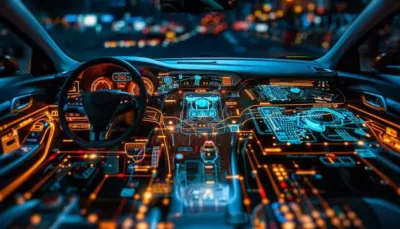
Modern vehicles are essentially computers on wheels. Embedded systems manage engine control, ABS braking systems, adaptive cruise control, airbags, infotainment platforms, and Advanced Driver Assistance Systems (ADAS). Safety is one of the most critical requirements in this industry.
Aerospace and Defense
Aircraft, satellites, and unmanned aerial vehicles (UAVs) rely on highly reliable and resilient embedded systems. Their software must comply with stringent international safety standards and undergo extensive validation and testing.
Industry 4.0
In modern manufacturing environments, embedded systems automate production lines, control industrial robots, and collect operational data to improve efficiency and productivity. Connectivity between machines is a cornerstone of smart factories.
Consumer Electronics
Smart TVs, printers, gaming consoles, and multimedia devices are all examples of embedded systems. They manage content processing, user interfaces, and communication with other connected devices.
Healthcare and Medical Devices
Medical equipment such as pacemakers, MRI scanners, patient monitoring systems, and insulin pumps depend on embedded systems. Given the critical nature of these applications, safety and reliability are paramount.
Smart Homes and Building Automation
Smart thermostats, security systems, connected lighting, and energy management solutions demonstrate how embedded systems improve comfort, convenience, and efficiency in our homes and buildings.
Current Trends and Challenges
The embedded systems industry continues to evolve rapidly, driven by technological innovation and new market demands.
Internet of Things (IoT)
The Internet of Things is one of the main growth drivers for embedded systems. By connecting billions of devices to the internet, IoT enables real-time data collection, analysis, and automation. This trend has accelerated the development of compact, cost-effective, and energy-efficient embedded solutions.
Cybersecurity
As connectivity increases, so do security risks. Embedded systems have become attractive targets for cyberattacks, particularly in critical sectors such as healthcare, transportation, and industrial infrastructure.
Designing secure systems from the earliest stages of development has become a strategic priority. Security-by-design approaches, secure boot mechanisms, encrypted communications, and hardware-based protection are now essential components of embedded development.
Artificial Intelligence at the Edge
Artificial Intelligence (AI) and Machine Learning are increasingly being integrated into embedded systems, enabling devices to make autonomous decisions without relying on cloud computing.
Examples include surveillance cameras capable of detecting intrusions, predictive maintenance systems in industrial environments, and drones that can navigate autonomously while avoiding obstacles.
Real-Time Performance
Demand for ultra-low-latency systems continues to grow. This is particularly important for applications such as autonomous vehicles, robotics, and industrial control systems, where even a fraction of a second can make a critical difference.
DUNASYS: Your Embedded Systems Engineering Partner
At DUNASYS, we understand that mastering embedded systems is essential to driving innovation.
We specialize in the development of embedded software and hardware solutions for the automotive, railway, and aerospace industries, with a strong focus on safety-critical and real-time applications.
Every project comes with unique challenges, whether related to cost, performance, reliability, or regulatory compliance. By partnering with DUNASYS, you gain access to a team that combines expertise in software engineering, electronics, and industry-specific requirements.
We help our customers navigate the complexity of embedded systems development by delivering tailored solutions that leverage the latest technologies, including Artificial Intelligence, advanced communication protocols, and connected architectures.
Our engineering approach is built on close collaboration. From requirements definition and system architecture to development, validation, and final integration, we support you throughout the entire product lifecycle.
Your success is our priority.
Conclusion
Embedded systems are the backbone of the modern digital world. They power everything from smartwatches and connected devices to aircraft and autonomous vehicles.
Developing these systems requires a unique combination of hardware and software expertise, along with a deep understanding of performance, safety, and reliability constraints.
As IoT, Artificial Intelligence, and connected technologies continue to expand, embedded systems will play an increasingly important role in shaping the future of innovation. For businesses and engineers alike, mastering embedded technologies is becoming a key factor for long-term success and competitiveness.
Réponses à vos questions
Les systèmes embarqués sont le cerveau des véhicules modernes. Ils gèrent une multitude de tâches cruciales, de la gestion moteur et de la transmission au freinage ABS et au contrôle de stabilité. Ils sont aussi au cœur des systèmes de sécurité passive (airbags), des fonctionnalités de confort (climatisation, navigation GPS) et de l’info-divertissement. L’ingénieur automobile moderne est autant un expert en mécanique qu’en électronique et en informatique embarquée.
Le temps réel est absolument vital. Le moindre retard dans le traitement des données peut avoir des conséquences désastreuses. Par exemple, le système de freinage d’urgence doit réagir en quelques millisecondes pour éviter une collision. De même, les logiciels qui pilotent les airbags doivent se déclencher à un moment précis et dans un laps de temps extrêmement court pour être efficaces.
L’intelligence artificielle (IA) est de plus en plus présente, en particulier dans les véhicules autonomes et les systèmes d’aide à la conduite (ADAS). L’IA est utilisée pour le traitement des données provenant des capteurs (caméras, radars, LiDAR) afin de détecter les piétons, les autres véhicules ou les obstacles. Elle permet également au dispositif de prendre des décisions complexes, comme ajuster le régulateur de vitesse ou aider au stationnement. Le développement de ces logiciels IA exige une expertise à la fois en informatique et en apprentissage automatique.
Avec l’ajout de réseaux sans fil (Bluetooth, Wi-Fi, 4G) pour les mises à jour et la communication avec d’autres appareils, les véhicules sont devenus des cibles pour les cyberattaques. Un attaquant pourrait potentiellement prendre le contrôle de fonctions critiques du véhicule, dérober des données personnelles ou perturber son fonctionnement. La conception de systèmes embarqués automobiles sécurisés est une priorité, impliquant des tests d’intrusion rigoureux, un code crypté et des mises à jour sécurisées.
Pour ces véhicules, la gestion de l’énergie est l’une des tâches les plus critiques. Les systèmes embarqués sont responsables de surveiller en permanence l’état de la batterie, d’optimiser la consommation d’énergie des composants du véhicule et de gérer la recharge. Des algorithmes sophistiqués sont utilisés pour prédire l’autonomie restante et ajuster les performances en fonction des conditions de conduite. L’efficacité de ces logiciels est directement liée à l’autonomie et aux performances du produit final.