Tracking of Company Vehicles and Optimization
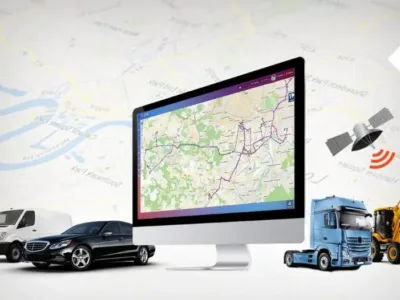
One of the primary concerns for businesses looking to optimize their operations and increase profitability is the effective management of their fleet. Technology has played an important role in the way companies manage and monitor their mobile assets. Among these technologies, geolocation stands out as a key solution. Vehicle geolocation for professional fleets has become an essential tool for fleet managers. In a constantly evolving professional environment, this innovation offers considerable potential for optimizing the management of a company’s assets. In the following sections, we will explore what geolocation means for professional vehicles, what it enables, and the criteria for selecting the right system.
What Is Geolocation for Professional Vehicles?
Professional vehicle geolocation is a technology that enables the real-time tracking and pinpointing of a vehicle’s exact position. This vehicle can be a truck, a car, or any other mode of transport.
The use of geolocation in the context of professional vehicles is particularly significant for companies operating a vehicle fleet. Geolocation makes it possible to collect a wealth of valuable data on each vehicle, including stops, speed, routes, and more. This data is then centralized and analyzed using software, allowing the fleet manager to optimize route planning, trip management, maintenance, and vehicle safety.
Geolocation also enables the detection of specific events and the generation of detailed reports. This real-time data and in-depth analysis allow companies to make informed decisions in order to improve fleet efficiency, reduce costs, and minimize risks.
What Does Professional Vehicle Geolocation Enable?
As outlined above, geolocation is an indispensable strategic asset for any fleet manager. In a constantly evolving professional environment, it offers considerable potential for optimizing the management of a company’s assets. Geolocation delivers the following benefits:
First, geolocation enables real-time tracking of each vehicle’s position, route optimization, and the minimization of downtime. In real time, fleet managers can adjust routes based on traffic, weather conditions, and other variables. Task and appointment scheduling is also carried out with greater precision. This increases operational efficiency and, as a result, reduces operating costs.
Asset and personnel safety are major concerns for businesses. Geolocation enables real-time vehicle safety monitoring, the detection of risky behavior, and rapid intervention in emergency situations. It also allows managers to select safer routes by avoiding dangerous areas, and to prevent theft while enabling immediate action to recover a vehicle.
Geolocation enables proactive maintenance management. It makes it possible to monitor preventive vehicle maintenance, reduce unexpected breakdowns, and optimize upkeep costs. Mileage is tracked and scheduled maintenance operations are carried out on time. The result is lower repair costs, fewer breakdowns, and an extended vehicle lifespan.
Regulations governing vehicle and driver monitoring are constantly evolving. Geolocation helps companies comply with these requirements, avoiding penalties and disputes. For example, it enables businesses to collect data on CO2 emissions and fuel consumption.
The geolocation solution you select must integrate seamlessly with your existing IT systems. It must also adapt to your specific requirements, regardless of fleet size or industry sector.
What Criteria Should Be Considered When Choosing a Geolocation System?
Choosing which geolocation system to integrate into fleet management is an important strategic decision, as it can have a significant impact on a company’s operational efficiency and profitability. Several criteria should be taken into account before making a choice.
First, the various features of the service should be considered: real-time tracking, trip history, alerts and notifications, and so on.
The geolocation system must be easy to integrate with the systems and software already in place within the company, and compatible with the vehicles in the fleet. It must also be straightforward for fleet managers to use. Quick and simple installation is equally important in order to minimize vehicle downtime.
It is also important to choose a system from a company that offers fast, high-quality customer support in the event of issues. Ensure that the provider offers adequate training so that the system can be used to its full potential.
DUNASYS: Your Partner for a High-Performing Fleet
DUNASYS is a company specializing in connected automotive engineering. We offer comprehensive, tailored support to help you get the most out of geolocation. DUNASYS helps you reduce operating costs and maximize margins while providing advanced security solutions for complete peace of mind. We offer fully customizable geolocation solutions that adapt to your requirements, whatever your industry sector and fleet size.
Professional vehicle geolocation has become an indispensable tool for any business seeking to improve fleet management, increase productivity, and reduce costs. DUNASYS is ideally positioned to support you through this transition.
With solid expertise, a comprehensive range of solutions, and an unwavering commitment to customer satisfaction, DUNASYS enables you to transform your fleet into a strategic asset. Do not wait any longer: contact us today and discover how we can help you optimize the management of your professional fleet.
Questions & Answers
Professional vehicle geolocation enables businesses to track their fleet, optimize journeys, reduce costs, and improve the management of field operations. It is a strategic tool for any employer managing multiple vehicles.
A GPS device (or tracker) installed in the vehicle captures real-time positions and transmits the data to a fleet management platform. The employer can then view trips, stops, and vehicle activity.
The CNIL (French data protection authority) strictly regulates the use of geolocation. The employer must inform employees, justify the use of the device, limit data collection to working hours, and ensure the protection of collected personal data.
Fleet managers can optimize routes, improve productivity, detect unauthorized vehicle use, and anticipate maintenance needs. Real-time geolocation helps rationalize resources.
The employer must configure the system to be inactive outside working hours, disable on-demand tracking (for mixed-use vehicles), and implement limited data retention periods, in accordance with CNIL regulations.
Yes, for territorial authorities and municipalities it enables tracking of service vehicles, better allocation of resources, securing of journeys, and proof of completed interventions.
Systems collect GPS data (location, speed), vehicle operating data (mileage, engine on or off), and usage indicators. This information enables precise fleet management.
Yes, the GPS tracker can be installed in the vehicle within minutes. It is discreet, reliable, and can be linked to other sensors. Dunasys offers ready-to-use embedded solutions compatible with all types of professional fleets.
Yes, the platforms associated with geolocation devices provide real-time tracking of each vehicle, with alerts, reports, and history. This enables an immediate response to any incident or unexpected event.
Dunasys designs professional geolocation systems integrated into its connected vehicle solutions. These devices ensure vehicle tracking, fleet management, and compliance with the legal framework governing privacy, data, and CNIL regulations.